
How William the Conqueror Weaponised Data
What the Domesday Book tells us about tax, power and why rulers have always wanted better data

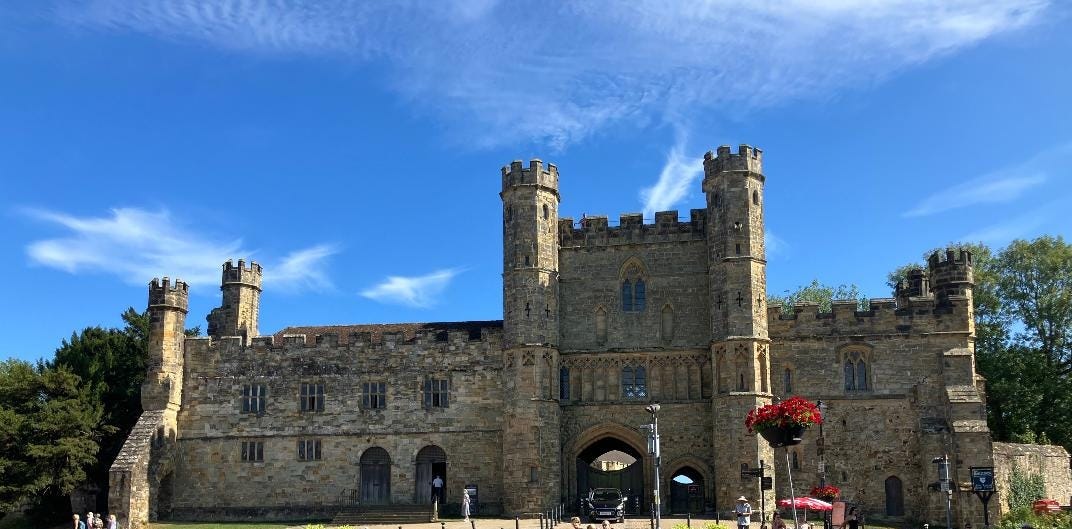
A few days ago, I had to visit the historical town of Battle in East Sussex in relation to some domestic chores. The sight of the famous Abbey reminded me of my previous book ‘A Brief History of Data’ in which I had a chapter that went into the reason behind the Dooms Day book which came about after the Norman invasion of 1066.
We often talk about the power and value of data as fuelling modern economies, but this is not as new as we may think. Ancient rulers understood its value long before Silicon Valley did. In 1085, William the Conqueror commissioned what may be England’s most consequential data project, the Domesday Book. The Domesday Book wasn’t a single volume but actually two books: Great Domesday and Little Domesday. Together they run to more than 800 folios and roughly two million words.

So why where these books created?
Nineteen years after the Norman invasion, England remained a conquered country under immense strain as there was the ever present threat of invasion from the Danish king Cnut IV. William retained mercenaries for defence of the realm and as mercenaries are want to do, they expected to be paid.
One of the reasons behind the books was in all likelihood taxation. The survey asked essential questions like who owned each manor, who had owned it before 1066, what the land was worth, how much could be taxed, what sort of terrain it contained and which productive assets (ploughs, livestock, labourers and freemen) came with it. A ruler short of money naturally wants a clearer picture of who possesses what, and the line from measurement to revenue is one of the oldest in public administration.

Whilst the explanation of taxation is persuasive, taxation can’t be the whole story. Interestingly the text was organised by manor rather than taxpayer. A lord with scattered estates might appear throughout the record, hardly ideal for a collector trying to calculate one person’s tax liability.
England’s property ownership structure had been turned upside down by the invasion. Anglo-Saxon landholders had been displaced, estates had changed hands and documentation was often absent, contested or inconvenient. By recording who held what, the survey did not simply describe the new order, it legitimise it.
On 1 August 1086, William summoned all the great men of his realm to Salisbury. Archbishops, bishops, abbots, earls, barons, sheriffs and knights all swore allegiance to him. Their right to hold land was recognised as a right flowing from the king. This meant that what the Crown acknowledged, the Crown could also withdraw. This was the first proper instantiation of the feudal system in history.

By medieval standards, these books were not just a record they were an information infrastructure to run the country with. The lesson of Domesday is that data is never merely a collection of facts. It is a way of deciding what counts, who counts and who gets to do the counting. The person who defines the fields in the database or report often defines the terms of the debate.
You can read more about how data’s importance manifested itself early in mankind’s history, even all the way back to the stone age in ‘A Brief History of Data’.